Title of the work
Country of the First Edition
Country/countries of popularity
Original Language
First Edition Date
First Edition Details
Maria Rosińska, “Filemon i Baucyda”, Świerszczyk 26 (1982): 328–329.
ISBN
Genre
Adaptation of classical texts*
Target Audience
Children (6–9)
Cover
We are still trying to obtain permission for posting the original cover.
Author of the Entry:
Marta Pszczolińska, University of Warsaw, m.pszczolinska@al.uw.edu.pl
Peer-reviewer of the Entry:
Katarzyna Marciniak, University of Warsaw, kamar@al.uw.edu.pl
Elżbieta Olechowska, University of Warsaw, elzbieta.olechowska@gmail.com
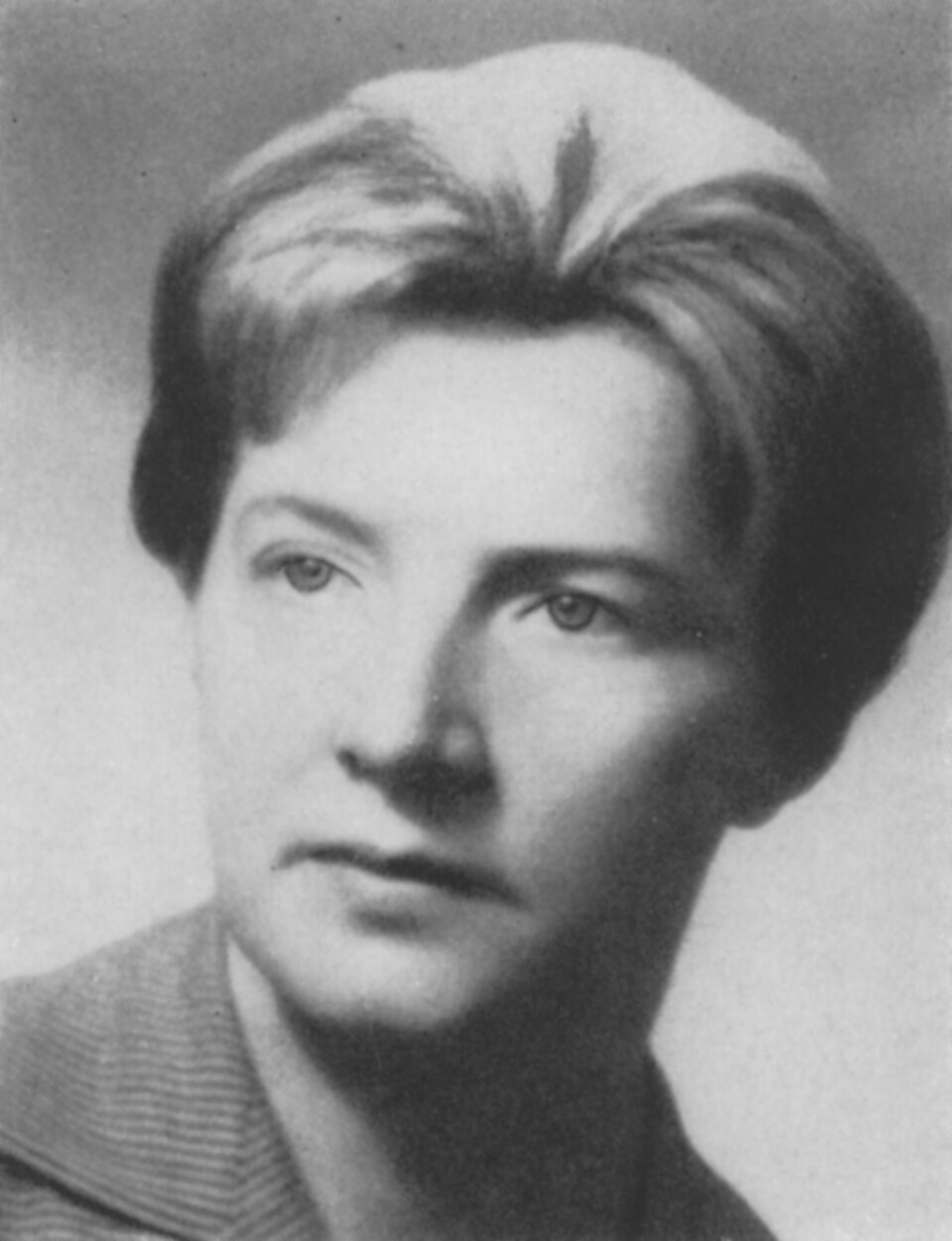
Photograph from the book Polska ilustracja książkowa [Polish book illustrations], ed.by Michał Bylina, Józef Czerwiński, Roman Tomaszewski, Warszawa: Wydawnictwa Artystyczne i Filmowe, 1964. Retrieved from Wikimedia Commons (accessed: March 9, 2026).
Maria Mackiewicz
, 1927 - 2004
(Illustrator)
Maria Mackiewicz (1927–2004) was a Polish illustrator, painter and graphic designer. She graduated from the faculty of painting at the Academy of Fine Arts in Warsaw. Her main interest was painting and first of all illustrating books for children, including fairy-tale collections and obligatory school readings. Most often she aimed her works at the youngest readers, as she collaborated with Miś [Teddy Bear], Świerszczyk [Little Cricket], and Płomyczek [Tiny Flame], magazines for children aged 4–13. Her illustrations also included post cards designed for UNICEF and a nature educational series for the Polish national Nature Conservation League. She was also theatre and film designer. In 1985 she was won “Uśmiechnięty Niedżwiadek” [Smiling Bear Cub] prize, awarded in a plebiscite among children readership of the Miś magazine; it was her most appreciated prize.
Source:
"Maria Mackiewicz" at nakanapie.pl (accessed: March 9, 2026)
Bio prepared by Marta Pszczolińska, University of Warsaw, m.pszczolinska@al.uw.edu.pl
Maria Rosińska
, 1909 - 1992
(Author)
Maria Rosińska (1909–1992) was a Polish classicist, Latin teacher, and author of poetry, children’s prose, and radio plays for children. Born in Warsaw, she attended Warsaw boarding school for girls led by Leonia Rudzka and later University of Warsaw where she graduated from classical philology in 1932. She worked as a teacher and published her first works in the quarterly Filomata (accessed 12 December, 2025), aimed at high school students. During WW2 she led clandestine lectures in Warsaw. After the fall of the Warsaw Uprising in 1944, she was deported to Germany for forced labour. In 1945, she initially stayed in forced emigration camps in Osterfeld and Mülheim an der Ruhr, where she ran a primary school and adult education courses, and managed an amateur and a puppet theatres. There, she wrote texts for children, which were published in 1946 so that they could be used by children in other camps.
After the war she lived in Gliwice and focused on cultural, literature and educational activities aimed at children. She authored several short stories and novels aimed at children. She also published in leading children’s periodicals, such as Iskierki [The Sparklings], Płomyczek [Tiny Flame], Świerszczyk [Little Cricket], and Miś [Teddy Bear], local Silesian periodicals, but also in Filomata which after the war targeted university students and scholars focused on ancient culture and its reception. For years she collaborated with Polish Radio as the author of radio plays and programmes for children.
Source:
"Rosińska Maria" at Polscy pisarze i badacze literatury XX i XXI wieku, Instytut Badań Literackich (accessed: March 9, 2026).
Bio prepared by Marta Pszczolińska, University of Warsaw, m.pszczolinska@al.uw.edu.pl
Summary
Disguised as a wanderer, Zeus travels the earth with Hermes to see whether people respect the sacred laws of hospitality. During their travel, the gods encounter indifference and even hostility. However, a couple of impoverished elders welcome the strangers as if they were gods, and share a festive meal with them despite having little food themselves. After finishing the meal, the gods reward the old couple for their kindness by granting them their heart’s desire, and punish the inhospitable neighbours by flooding the valley in which they had been living. The hospitable couple only wish to live together as servants in the temple of the gods, and to die together when their time comes. In the end, they are both transformed in the same instant into trees – an oak and a linden.
Analysis
Maria Rosińska chose the Ovidian myth of Philemon and Baucis to be published as an illustrated double-page short story in Świerszczyk [Little Cricket], a magazine targeting children aged 7–9. This myth is well known to classicists, but has rarely been adapted for young readers. Although Philemon and Baucis as protagonists were familiar to child audiences thanks to Nathaniel Hawthorne’s chapter “The Miraculous Pitcher” in A Wonder-Book for Girls and Boys (1853), this was first time that Świerszczyk had published this myth. The story is written in the style of a mythical tale, beginning with the sub-title A Greek legend and a typical fairy-tale opening line: “It happened a very, very long time ago.”
Although Ovid is clearly her primary inspiration, Rosińska uses the Greek names for Jupiter and Mercury. Zeus appears at the very beginning, as “the most important of the gods of Greece”, so children easily understand why he wants to check whether people respect the rules of hospitality, established as part of the ancient order. These rules were also very important for Polish cultural heritage. As a lack of hospitality was considered rude, offensive or even unforgivable, the anger of the gods at being rejected by the human inhabitants of the Earth was easily understandable to the child reader. Children could also regard the mythical retribution against the heartless neighbours as just: according to the rule of fairy tales, they got what they deserved.
Against the backdrop of inhospitality and hostility, Rosińska presents the title protagonists as Ovid depicts them: a humble, hospitable, old couple who embody the custom of xenia. Despite living in tough conditions, they welcome strangers with a kind smile and reverence. The author sticks closely to Ovid’s account, even mentioning the same variety of food that Baucis and Philemon offer to their guests: smoked pork, eggs, radishes, endive, and a third-course for dessert, nuts, figs, dates, and honeycomb. While serving wine, the old couple recognise the gods when the wine jar remains full. At Zeus’ request they climb with the gods to the summit to see their neighbours punished. Rosińska again follows Ovid in depicting them weeping and bewailing the sad fate of their former neighbours. When they can claim any prize from the gods, they remain as they were, kind, just and humble, and their needs remain simple as well. Their wish to serve as priests and to die together is granted. Rosińska omits the touching Ovidian farewell, vale, o coniunx (goodbye, oh consort), but preserves the elements of their long pious life and their transformation into trees.
As she modestly acknowledges at the end, the tale is written: “according to Ovid, adapted by Maria Rosińska”. It is clear that other sources were not used as her inspiration.
Two illustrations by Maria Mackiewicz depict grey-bearded Zeus and Hermes as a boy, invited by the white-haired Philemon to his small cabin, and a Greek temple on the shore of a lake, accompanied by two large trees.
Addenda
The entry presents the result of research conducted within the project “Classical Antiquity in Periodicals for Children and Young Adults in Polish People’s Republic (PRL) – Classical Education, Promotion of Political Ideology, or Expression of Resistance? Changes in the Reception of Classics in the PRL from 1945 to 1989,” funded by the National Science Centre (Narodowe Centrum Nauki) Preludium grant no. 2022/45/N/HS2/00549, and led by Marta Pszczolińska at the Faculty of “Artes Liberales” at the University of Warsaw.