
arrow_upward

Aleksander Krawczuk

Magistra Vitae

YEAR: 1984

COUNTRY: Poland

chat Submit error

Cateogry icon

Title of the work

Magistra Vitae

Country of the First Edition

Country/countries of popularity

Poland

Original Language

Polish

First Edition Date

1984

First Edition Details

Aleksander Krawczuk, “Magistra vitae”, Magazyn Razem 1 (1984)–8 (1985).

ISBN

ISSN: 0239-7145

Genre

Essays

Target Audience

Crossover (teenagers, young adults)

Cover
Missing cover

We are still trying to obtain permission for posting the original cover.


Author of the Entry:

Marta Pszczolińska, University of Warsaw, m.pszczolinska@al.uw.edu.pl

Peer-reviewer of the Entry:

Katarzyna Marciniak, University of Warsaw, kamar@al.uw.edu.pl 

Elżbieta Olechowska, University of Warsaw, elzbieta.olechowska@gmail.com
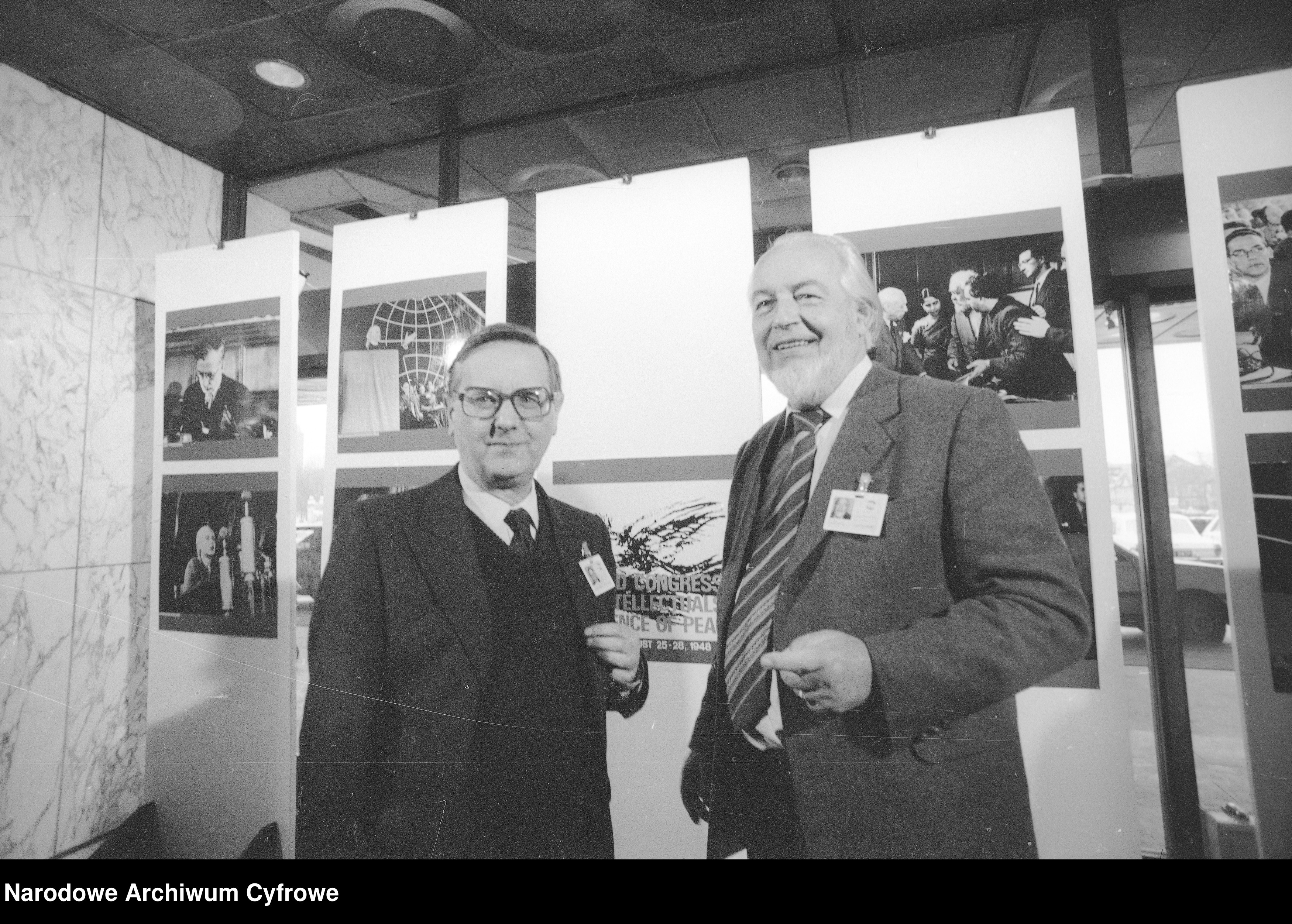
Prof. Aleksander Krawczuk (left) and prof. Hoimar von Ditfurth, German psychiatrist and neurologist, at the Congress of Intellectuals in Defense of a Peaceful Future for the World at the Victoria Hotel in Warsaw, 1986. Narodowe Archiwum Cyfrowe 3/44/0/-/34.

Aleksander Krawczuk , 1922 - 2023
(Author)

Aleksander Krawczuk (1922–2023) was a Polish ancient historian and classical philologist, writer, keen populariser of classical antiquity, and politician. Born and raised in Kraków, he associated his entire academic career with the Department of Ancient History of the Jagiellonian University, where in 1985 he became a titular professor and head of the department. Besides his scholarly activities, in the early 1960s, he began writing popular books and articles in magazines to increase awareness of Graeco-Roman classics and ancient history in an approachable manner. His aim was to create from historical documents and data books on antiquity that would accurately reflect the past but at the same read like fascinating novels. He confessed in a broadcast that writing articles in accordance with strict scientific methods for a very narrow circle of experts was a not enough. “The thing about history is that it is a living and socially necessary science only when it reaches the widest possible audience. Then it fulfils its role: it shapes thinking and social awareness, stimulates, benefits”.* Some historians did not appreciate this kind of writing, but readers decided quite the opposite. His books became extremely popular in Poland during the communist era, selling out quickly and being republished multiple times; they were also translated into other languages. In the 1970s and 80s, for almost fifteen years, Krawczuk captured television audiences hosting a regular television program on the ancient history and culture Antyczny świat profesora Krawczuka [Professor Krawczuk’s Ancient World]. Owing to his popular publications, TV show and essays on ancient world in historical and cultural weeklies (for example Poczet cesarzy rzymskich [Gallery of Roman Emperors] for the weekly Przekrój), and also to his meetings with the readers and lecture tours across Poland, the professor became a renowned public figure in Poland and the most recognizable historian in the 1980s. In 1986 he became the Minister of Culture and Art in the last Communist governments in Poland and after the fall of Communism he was elected MP of the new democratic parliament twice. 

He published over forty books in total. For his scientific achievements, literary works and popularisation of classics, he was awarded prestigious orders and medals, such as the Grand Cross of Polonia Restituta (1997), Gloria Artis Medal for Merit to Culture (2009), and Kowadło Kuźnicy (2013).


* An interview to Edward Miszczak in 1986. Quoted in Michał Czyżewski, “Aleksander Krawczuk: chcę by moje książki o historii dało się czytac jak powieści”, at Polskie Radio website: “Historia ma to do siebie, że wtedy jest nauką żywą i potrzebną społecznie, jeśli dociera do możliwie szerokich rzesz. Wtedy spełnia ona swoją rolę: kształtuje myślenie i świadomość społeczną, pobudza, daje coś”.


Sources:

Elżbieta Olechowska, “Aleksander Krawczuk’s Fascinating Antiquity” in Classics and Class. Greek and Latin Classics and Communism at School, David Movrin and Elżbieta Olechowska, eds., Warsaw–Ljubljana, Faculty of “Artes Liberales”, University of Warsaw, and Znanstvena založba Filozofske fakultete Univerze v Ljubljani (Ljubljana University Press, Faculty of Arts), and Wydawnictwo DiG, 2016, 337–356.

Michał Czyżewski, "Aleksander Krawczuk: chcę, by moje książki o historii dało się czytać jak powieści", Polskie Radio 24 (accessed: March 9, 2026)

"Wspomnienie o profesorze Aleksandrze Krawczuku", Uniwersytet Jagielloński w Krakowie, Archiwum (accessed: March 9, 2026).


Bio prepared by Marta Pszczolińska, University of Warsaw, m.pszczolinska@al.uw.edu.pl


Summary

Magistra vitae is a series of ten articles on ancient history and its various aspects. The texts in the column are usually half-page entries that focus on an ancient phenomenon, historical event, or character. 

The series opens with two texts published in Magazyn Razem 1 (May 1984). The first is an interview with the professor, conducted by Wojciech Tatarczuch and entitled “Zawinił Sofokles” [Sophocles was to blame], which introduces young audiences to Krawczuk’s journey to antiquity when he was their age, his early years during the war, and his subsequent academic career. Krawczuk considers this career to be “available to anyone who is eager to systematically expand their knowledge”.* The second text is “Historia “Historii”” [The History of ‘History’]. It explains the Greek origin of the word ‘history’, its meaning for the ancients and for the contemporary world and the importance of Herodotus for the discipline.

The 2nd issue (June 1984) contains “Aleksander Wielki i historycy” [Alexander the Great and historians]. It presents Alexander not only as a character who constantly built his unprecedented empire and gained glory that accompanied his remarkable deeds, but also as a fully aware creator of his own popular image, which is well documented in the sources that he inspired or ordered to be created. Krawczuk highlights the significant role of Callisthenes, Aristotle’s nephew and Alexander’s court historian, in recounting historical events, perpetuating and transmitting the legend of Alexander as being the equal of Achilles and Heracles, as the son of Zeus on a mission to conquer the barbarian world and impose Graeco-Macedonian culture. Callisthenes’ work ended with his untimely death – ironically – on the orders of the very hero he was describing; it did not survive in its original form. Nevertheless, it is still a source living in other historical works, and is even studied in the most recent publications.**

In the 3d issue (August 1984), the professor provides a brief summary of the events of the Second Punic War in his essay, “Wojna światowa 2200 lat temu” [World War 2200 years ago]. To mark the 2,200th anniversary of the Battle of Cannae (or, depending on how you count year zero, the Battle of Lake Trasimene), he presents the course of the war, its battles, and famous commanders. The essay concludes with a bitter reflection on war as a lesson for the future.

“Amnestie starożytne” [Ancient amnesties] appeared in Magazyn Razem 7 (November 1984), presenting the concept of amnesty as it originated in antiquity. Krawczuk outlines the situation of internal conflict and political crisis in Athens in 403 BC following the lost war with Sparta, and the circumstances of the first recorded amnesty confirmed in sources, when both sides of the conflict – the democratic and the oligarchic factions – agreed “not to recall past wrongs” (μή μνησικακεῖν).*** The article then moves on to present the Roman amnesty of 44 BC as an undeniable merit of Cicero’s speech in the Senate, in which he invoked the Athenian amnesty of 403 BC and proposed its implementation. 

In the 8th issue (December 1984), Krawczuk published an article entitled “Io – dziewczyna Zeusa” [Io – Zeus’ girlfriend]. As it dealt with myth rather than history, it was not included in the Magistra vitae series.

The title theme of the professor’s essay in the 1 (9) issue (January 1985), was tolerance – “Tolerancja”. He presents this phenomenon (or its absence) in medieval, modern, and ancient times alike, focusing also on the relationship and tensions between the Roman state religion and Christianity, religious persecution and the eventual freedom to worship proclaimed in the Edict of Milan in 313.

For the next essay in the issue 2 (10) of February 1985, Krawczuk chose a theme opposite of tolerance, fanaticism. He defined fanaticism and its dangers, also referring to Roman history.

In the issue no. 3/1985, “Suknie i fryzury” [Dresses and hairdos] refers to feminine and masculine beauty ideals, as well as the fashion of garments and hairstyles. On the latter topic, Krawczuk allows Ovid to speak for the Romans, quoting long fragments of his Ars amatoria. Krawczuk also discusses how knowledge of fashionable women’s hairstyles can be useful for historians dating ancient statues.

The next feuilleton, entitled “Tales i Ditfurth” [Tales and Ditfurth] in issue 4/1985, explains the phenomenon of popularity of Hoimar von Ditfurth’s**** works, especially the trilogy Kinder des Weltalls [Children of the Universe], Im Anfang war der Wasserstoff [In the beginning was hydrogen], and Der Geist fiel nicht vom Himmel [The spirit did not fall from heaven], and compares their subject matter to that studied by the early Pre-Socratic Greek philosophers, focusing on Tales of Miletus and natural philosophy, and subsequently on Aristotle.

In the 5/1985 issue, “Triumf i owacja” [Triumph and ovation] explores the ancient roots of both terms, still present in language and everyday life. Krawczuk explains the differences between their ancient and contemporary meanings, and provides a detailed description of what ancient triumphs looked like. 

“Siedem dni tygodnia” [Seven days of the week] in the 6/1985 issue, is the final instalment. The professor presents there the Roman origins of measuring time in European culture: the Roman beginning of the year, the number of months and days in the month, the Roman names of the months in many languages, and the Roman days of the week. He also describes the ancient origins of celebrating dies solis, which date back to AD 321.

Having ended the Magistra vitae column, in the 7/1985 issue, Krawczuk published a longer stand-alone article on Ovid, entitled “Za co kocham Owidiusza” [Why I love Ovid], which was a transition from the “historical” series Magistra vitae to the “mythical” series Alfabet mitologiczny.


* Aleksander Krawczuk, „Zawinił Sofokles”, Magazyn Razem 1 (1984): 10.

** For example, in the early 1980s, when “Magistra vitae” was published, A.B. Bosworth analyzed Callisthenes as a primary source for Arrian, focusing on the propagandistic nature of his writings in A Historical Commentary on Arrian’s History of Alexander, vol 1 (1980).

*** Cf. Aristot. Ath. pol. 39.6: τῶν δὲ παρεληλυθότων μηδενὶ πρὸς μηδένα μνησικακεῖν ἐξεῖναι (…), “And that there be a universal amnesty for past events, covering everybody (…)”, trans. H. Rackham.

**** Hoimar von Ditfurth (1921–1989) was a German physician and scholar turned television presenter and author of popular books on science. The photograph in the Bio section shows Krawczuk and Ditfurth at the Congress of Intellectuals in Defence of a Peaceful Future for the Word held at the Victoria Hotel in Warsaw in 1986.

Analysis

Before the monthly Magazyn Razem published its first issue (May 1984), Aleksander Krawczuk was already a well-known historian, both as an academic and a keen populariser of classical antiquity. Today, we might call him an influencer or trendsetter in the best sense of the terms. From the magazine’s first issue, Krawczuk published a history column entitled in Latin, Magistra vitae. What seems to be the most important thing for educational purposes is not only presenting historical events, but also demonstrating in an accessible way that history is indeed teacher of life and that we all can still learn from the experiences of ancient times. Each feuilleton includes reflections on the connections between antiquity and the contemporary world, and on how we can benefit from history and its lessons. 

For example, while discussing Alexander the Great, Krawczuk illustrates how propaganda values were present in his official image, and explains why Callisthenes’ work remains important today, even though it has been lost. When referring to the Second Punic War, he explains that its anniversary is not to him a real reason for publication and continues: “I think that remembering bygone world wars, battles and defeats is necessary. First of all, to make us realise how little humanity has changed in terms of its belligerence and aggressiveness. Secondly, to warn us: let’s make sure that no one twenty-two centuries into the future, can talk about our times the way we talk about the Punic Wars, as years of bloodshed and conflagration.”* Forty years after WWII these words were as relevant as they are today. The feuilleton on military triumphs ends with a similar peaceful conclusion – let us wish for triumphs and ovations caused only by the success of creative thought, and not by warfare. 

When writing about fanaticism, he advises using knowledge and culture as powerful weapons against it, coupled with respect and consideration. In the feuilleton about Tales and Ditfurth, the latter is presented as heir to a line of thought dating back to the 6th century BC, and his work is described as a derivative of a magnificent ancient tradition that required creators to have a wide range of interests, and to boldly tackle key issues, presenting their thoughts in a way accessible to the general public with an average level of education. Similarly, Krawczuk demonstrates the enduring nature of ancient heritage by presenting the celebration of Sunday as a day free from official activities and duties – a beautiful example of the permanence of certain principles and living proof of the continuity of culture and civilizational order.

It is worth noting that Krawczuk’s articles aimed at young readers are both light and humorous, making them easily accessible and comprehensible. This was one of the factors that led to his popularity. To demonstrate how important and influential Krawczuk’s column was, the editors published a letter from a reader in the 2/1985 issue. The author of the letter first praised the editors for the professor’s series, which had been published since the 1st issue, and then expressed his joy at its return after an absence of three months. At the end, the reader concluded: “As usual, even though he writes about times so distant, the professor is incredibly relevant, and because he writes with great eloquence, lightness and wit, it is difficult not to like him. So make sure that Krawczuk is never missing, and many readers will certainly be grateful for it.”**


* “Myślę, że pamięć o dawnych wojnach światowych, bitwach i klęskach jest potrzebna. Najpierw po to, aby nam uświadomić, jak niewiele się ludzkość zmieniła w swojej wojowniczości i agresywności. Dalej zaś po to, aby nas ostrzec: oby po dwudziestu dwóch wiekach nikt nie musiał mówić o naszych czasach tak, jak my mówimy o wojnach punickich, o latach krwi i pożogi.”

** Jarosław Borkowski, “Zatrzymać Krawczuka”, Magazyn Razem 2 (19885): 29: “Profesor jak zwykle, choć pisze o czasach tak odległych, jest niesamowicie aktualny, a że pisze z ogromną swadą, lekkością i dowcipem – trudno go nie lubić. Dbajcie więc o to, by Krawczuka nigdy nie zabrakło, a na pewno wielu czytelników będzie za to wdzięcznych”.

Further Reading

Olechowska, Elżbieta, “Aleksander Krawczuk’s Fascinating Antiquity” in Classics and Class. Greek and Latin Classics and Communism at School, David Movrin and Elżbieta Olechowska (eds.), Warsaw–Ljubljana: Faculty of “Artes Liberales”, University of Warsaw, and Znanstvena založba Filozofske fakultete Univerze v Ljubljani (Ljubljana University Press, Faculty of Arts), and Wydawnictwo DiG, 2016, 337–356.

Addenda

The entry presents the result of research conducted within the project “Classical Antiquity in Periodicals for Children and Young Adults in Polish People’s Republic (PRL) – Classical Education, Promotion of Political Ideology, or Expression of Resistance? Changes in the Reception of Classics in the PRL from 1945 to 1989,” funded by the National Science Centre (NCN) Preludium grant no 2022/45/N/HS2/00549.

Yellow cloud
Leaf pattern
Leaf pattern

Title of the work

Magistra Vitae

Country of the First Edition

Country/countries of popularity

Poland

Original Language

Polish

First Edition Date

1984

First Edition Details

Aleksander Krawczuk, “Magistra vitae”, Magazyn Razem 1 (1984)–8 (1985).

ISBN

ISSN: 0239-7145

Genre

Essays

Target Audience

Crossover (teenagers, young adults)

Cover

Missing cover

We are still trying to obtain permission for posting the original cover.


Author of the Entry:

Marta Pszczolińska, University of Warsaw, m.pszczolinska@al.uw.edu.pl

Peer-reviewer of the Entry:

Katarzyna Marciniak, University of Warsaw, kamar@al.uw.edu.pl 

Elżbieta Olechowska, University of Warsaw, elzbieta.olechowska@gmail.com

Prof. Aleksander Krawczuk (left) and prof. Hoimar von Ditfurth, German psychiatrist and neurologist, at the Congress of Intellectuals in Defense of a Peaceful Future for the World at the Victoria Hotel in Warsaw, 1986. Narodowe Archiwum Cyfrowe 3/44/0/-/34.

Aleksander Krawczuk (Author)

Aleksander Krawczuk (1922–2023) was a Polish ancient historian and classical philologist, writer, keen populariser of classical antiquity, and politician. Born and raised in Kraków, he associated his entire academic career with the Department of Ancient History of the Jagiellonian University, where in 1985 he became a titular professor and head of the department. Besides his scholarly activities, in the early 1960s, he began writing popular books and articles in magazines to increase awareness of Graeco-Roman classics and ancient history in an approachable manner. His aim was to create from historical documents and data books on antiquity that would accurately reflect the past but at the same read like fascinating novels. He confessed in a broadcast that writing articles in accordance with strict scientific methods for a very narrow circle of experts was a not enough. “The thing about history is that it is a living and socially necessary science only when it reaches the widest possible audience. Then it fulfils its role: it shapes thinking and social awareness, stimulates, benefits”.* Some historians did not appreciate this kind of writing, but readers decided quite the opposite. His books became extremely popular in Poland during the communist era, selling out quickly and being republished multiple times; they were also translated into other languages. In the 1970s and 80s, for almost fifteen years, Krawczuk captured television audiences hosting a regular television program on the ancient history and culture Antyczny świat profesora Krawczuka [Professor Krawczuk’s Ancient World]. Owing to his popular publications, TV show and essays on ancient world in historical and cultural weeklies (for example Poczet cesarzy rzymskich [Gallery of Roman Emperors] for the weekly Przekrój), and also to his meetings with the readers and lecture tours across Poland, the professor became a renowned public figure in Poland and the most recognizable historian in the 1980s. In 1986 he became the Minister of Culture and Art in the last Communist governments in Poland and after the fall of Communism he was elected MP of the new democratic parliament twice. 

He published over forty books in total. For his scientific achievements, literary works and popularisation of classics, he was awarded prestigious orders and medals, such as the Grand Cross of Polonia Restituta (1997), Gloria Artis Medal for Merit to Culture (2009), and Kowadło Kuźnicy (2013).


* An interview to Edward Miszczak in 1986. Quoted in Michał Czyżewski, “Aleksander Krawczuk: chcę by moje książki o historii dało się czytac jak powieści”, at Polskie Radio website: “Historia ma to do siebie, że wtedy jest nauką żywą i potrzebną społecznie, jeśli dociera do możliwie szerokich rzesz. Wtedy spełnia ona swoją rolę: kształtuje myślenie i świadomość społeczną, pobudza, daje coś”.


Sources:

Elżbieta Olechowska, “Aleksander Krawczuk’s Fascinating Antiquity” in Classics and Class. Greek and Latin Classics and Communism at School, David Movrin and Elżbieta Olechowska, eds., Warsaw–Ljubljana, Faculty of “Artes Liberales”, University of Warsaw, and Znanstvena založba Filozofske fakultete Univerze v Ljubljani (Ljubljana University Press, Faculty of Arts), and Wydawnictwo DiG, 2016, 337–356.

Michał Czyżewski, "Aleksander Krawczuk: chcę, by moje książki o historii dało się czytać jak powieści", Polskie Radio 24 (accessed: March 9, 2026)

"Wspomnienie o profesorze Aleksandrze Krawczuku", Uniwersytet Jagielloński w Krakowie, Archiwum (accessed: March 9, 2026).


Bio prepared by Marta Pszczolińska, University of Warsaw, m.pszczolinska@al.uw.edu.pl


Summary

Magistra vitae is a series of ten articles on ancient history and its various aspects. The texts in the column are usually half-page entries that focus on an ancient phenomenon, historical event, or character. 

The series opens with two texts published in Magazyn Razem 1 (May 1984). The first is an interview with the professor, conducted by Wojciech Tatarczuch and entitled “Zawinił Sofokles” [Sophocles was to blame], which introduces young audiences to Krawczuk’s journey to antiquity when he was their age, his early years during the war, and his subsequent academic career. Krawczuk considers this career to be “available to anyone who is eager to systematically expand their knowledge”.* The second text is “Historia “Historii”” [The History of ‘History’]. It explains the Greek origin of the word ‘history’, its meaning for the ancients and for the contemporary world and the importance of Herodotus for the discipline.

The 2nd issue (June 1984) contains “Aleksander Wielki i historycy” [Alexander the Great and historians]. It presents Alexander not only as a character who constantly built his unprecedented empire and gained glory that accompanied his remarkable deeds, but also as a fully aware creator of his own popular image, which is well documented in the sources that he inspired or ordered to be created. Krawczuk highlights the significant role of Callisthenes, Aristotle’s nephew and Alexander’s court historian, in recounting historical events, perpetuating and transmitting the legend of Alexander as being the equal of Achilles and Heracles, as the son of Zeus on a mission to conquer the barbarian world and impose Graeco-Macedonian culture. Callisthenes’ work ended with his untimely death – ironically – on the orders of the very hero he was describing; it did not survive in its original form. Nevertheless, it is still a source living in other historical works, and is even studied in the most recent publications.**

In the 3d issue (August 1984), the professor provides a brief summary of the events of the Second Punic War in his essay, “Wojna światowa 2200 lat temu” [World War 2200 years ago]. To mark the 2,200th anniversary of the Battle of Cannae (or, depending on how you count year zero, the Battle of Lake Trasimene), he presents the course of the war, its battles, and famous commanders. The essay concludes with a bitter reflection on war as a lesson for the future.

“Amnestie starożytne” [Ancient amnesties] appeared in Magazyn Razem 7 (November 1984), presenting the concept of amnesty as it originated in antiquity. Krawczuk outlines the situation of internal conflict and political crisis in Athens in 403 BC following the lost war with Sparta, and the circumstances of the first recorded amnesty confirmed in sources, when both sides of the conflict – the democratic and the oligarchic factions – agreed “not to recall past wrongs” (μή μνησικακεῖν).*** The article then moves on to present the Roman amnesty of 44 BC as an undeniable merit of Cicero’s speech in the Senate, in which he invoked the Athenian amnesty of 403 BC and proposed its implementation. 

In the 8th issue (December 1984), Krawczuk published an article entitled “Io – dziewczyna Zeusa” [Io – Zeus’ girlfriend]. As it dealt with myth rather than history, it was not included in the Magistra vitae series.

The title theme of the professor’s essay in the 1 (9) issue (January 1985), was tolerance – “Tolerancja”. He presents this phenomenon (or its absence) in medieval, modern, and ancient times alike, focusing also on the relationship and tensions between the Roman state religion and Christianity, religious persecution and the eventual freedom to worship proclaimed in the Edict of Milan in 313.

For the next essay in the issue 2 (10) of February 1985, Krawczuk chose a theme opposite of tolerance, fanaticism. He defined fanaticism and its dangers, also referring to Roman history.

In the issue no. 3/1985, “Suknie i fryzury” [Dresses and hairdos] refers to feminine and masculine beauty ideals, as well as the fashion of garments and hairstyles. On the latter topic, Krawczuk allows Ovid to speak for the Romans, quoting long fragments of his Ars amatoria. Krawczuk also discusses how knowledge of fashionable women’s hairstyles can be useful for historians dating ancient statues.

The next feuilleton, entitled “Tales i Ditfurth” [Tales and Ditfurth] in issue 4/1985, explains the phenomenon of popularity of Hoimar von Ditfurth’s**** works, especially the trilogy Kinder des Weltalls [Children of the Universe], Im Anfang war der Wasserstoff [In the beginning was hydrogen], and Der Geist fiel nicht vom Himmel [The spirit did not fall from heaven], and compares their subject matter to that studied by the early Pre-Socratic Greek philosophers, focusing on Tales of Miletus and natural philosophy, and subsequently on Aristotle.

In the 5/1985 issue, “Triumf i owacja” [Triumph and ovation] explores the ancient roots of both terms, still present in language and everyday life. Krawczuk explains the differences between their ancient and contemporary meanings, and provides a detailed description of what ancient triumphs looked like. 

“Siedem dni tygodnia” [Seven days of the week] in the 6/1985 issue, is the final instalment. The professor presents there the Roman origins of measuring time in European culture: the Roman beginning of the year, the number of months and days in the month, the Roman names of the months in many languages, and the Roman days of the week. He also describes the ancient origins of celebrating dies solis, which date back to AD 321.

Having ended the Magistra vitae column, in the 7/1985 issue, Krawczuk published a longer stand-alone article on Ovid, entitled “Za co kocham Owidiusza” [Why I love Ovid], which was a transition from the “historical” series Magistra vitae to the “mythical” series Alfabet mitologiczny.


* Aleksander Krawczuk, „Zawinił Sofokles”, Magazyn Razem 1 (1984): 10.

** For example, in the early 1980s, when “Magistra vitae” was published, A.B. Bosworth analyzed Callisthenes as a primary source for Arrian, focusing on the propagandistic nature of his writings in A Historical Commentary on Arrian’s History of Alexander, vol 1 (1980).

*** Cf. Aristot. Ath. pol. 39.6: τῶν δὲ παρεληλυθότων μηδενὶ πρὸς μηδένα μνησικακεῖν ἐξεῖναι (…), “And that there be a universal amnesty for past events, covering everybody (…)”, trans. H. Rackham.

**** Hoimar von Ditfurth (1921–1989) was a German physician and scholar turned television presenter and author of popular books on science. The photograph in the Bio section shows Krawczuk and Ditfurth at the Congress of Intellectuals in Defence of a Peaceful Future for the Word held at the Victoria Hotel in Warsaw in 1986.

Analysis

Before the monthly Magazyn Razem published its first issue (May 1984), Aleksander Krawczuk was already a well-known historian, both as an academic and a keen populariser of classical antiquity. Today, we might call him an influencer or trendsetter in the best sense of the terms. From the magazine’s first issue, Krawczuk published a history column entitled in Latin, Magistra vitae. What seems to be the most important thing for educational purposes is not only presenting historical events, but also demonstrating in an accessible way that history is indeed teacher of life and that we all can still learn from the experiences of ancient times. Each feuilleton includes reflections on the connections between antiquity and the contemporary world, and on how we can benefit from history and its lessons. 

For example, while discussing Alexander the Great, Krawczuk illustrates how propaganda values were present in his official image, and explains why Callisthenes’ work remains important today, even though it has been lost. When referring to the Second Punic War, he explains that its anniversary is not to him a real reason for publication and continues: “I think that remembering bygone world wars, battles and defeats is necessary. First of all, to make us realise how little humanity has changed in terms of its belligerence and aggressiveness. Secondly, to warn us: let’s make sure that no one twenty-two centuries into the future, can talk about our times the way we talk about the Punic Wars, as years of bloodshed and conflagration.”* Forty years after WWII these words were as relevant as they are today. The feuilleton on military triumphs ends with a similar peaceful conclusion – let us wish for triumphs and ovations caused only by the success of creative thought, and not by warfare. 

When writing about fanaticism, he advises using knowledge and culture as powerful weapons against it, coupled with respect and consideration. In the feuilleton about Tales and Ditfurth, the latter is presented as heir to a line of thought dating back to the 6th century BC, and his work is described as a derivative of a magnificent ancient tradition that required creators to have a wide range of interests, and to boldly tackle key issues, presenting their thoughts in a way accessible to the general public with an average level of education. Similarly, Krawczuk demonstrates the enduring nature of ancient heritage by presenting the celebration of Sunday as a day free from official activities and duties – a beautiful example of the permanence of certain principles and living proof of the continuity of culture and civilizational order.

It is worth noting that Krawczuk’s articles aimed at young readers are both light and humorous, making them easily accessible and comprehensible. This was one of the factors that led to his popularity. To demonstrate how important and influential Krawczuk’s column was, the editors published a letter from a reader in the 2/1985 issue. The author of the letter first praised the editors for the professor’s series, which had been published since the 1st issue, and then expressed his joy at its return after an absence of three months. At the end, the reader concluded: “As usual, even though he writes about times so distant, the professor is incredibly relevant, and because he writes with great eloquence, lightness and wit, it is difficult not to like him. So make sure that Krawczuk is never missing, and many readers will certainly be grateful for it.”**


* “Myślę, że pamięć o dawnych wojnach światowych, bitwach i klęskach jest potrzebna. Najpierw po to, aby nam uświadomić, jak niewiele się ludzkość zmieniła w swojej wojowniczości i agresywności. Dalej zaś po to, aby nas ostrzec: oby po dwudziestu dwóch wiekach nikt nie musiał mówić o naszych czasach tak, jak my mówimy o wojnach punickich, o latach krwi i pożogi.”

** Jarosław Borkowski, “Zatrzymać Krawczuka”, Magazyn Razem 2 (19885): 29: “Profesor jak zwykle, choć pisze o czasach tak odległych, jest niesamowicie aktualny, a że pisze z ogromną swadą, lekkością i dowcipem – trudno go nie lubić. Dbajcie więc o to, by Krawczuka nigdy nie zabrakło, a na pewno wielu czytelników będzie za to wdzięcznych”.

Further Reading

Olechowska, Elżbieta, “Aleksander Krawczuk’s Fascinating Antiquity” in Classics and Class. Greek and Latin Classics and Communism at School, David Movrin and Elżbieta Olechowska (eds.), Warsaw–Ljubljana: Faculty of “Artes Liberales”, University of Warsaw, and Znanstvena založba Filozofske fakultete Univerze v Ljubljani (Ljubljana University Press, Faculty of Arts), and Wydawnictwo DiG, 2016, 337–356.

Addenda

The entry presents the result of research conducted within the project “Classical Antiquity in Periodicals for Children and Young Adults in Polish People’s Republic (PRL) – Classical Education, Promotion of Political Ideology, or Expression of Resistance? Changes in the Reception of Classics in the PRL from 1945 to 1989,” funded by the National Science Centre (NCN) Preludium grant no 2022/45/N/HS2/00549.

Yellow cloud